
Seeing the Land Differently
8/21/26 · Richard Bergmann“One of the greatest gifts of travel is not simply seeing a new landscape, but learning to see the land differently.”
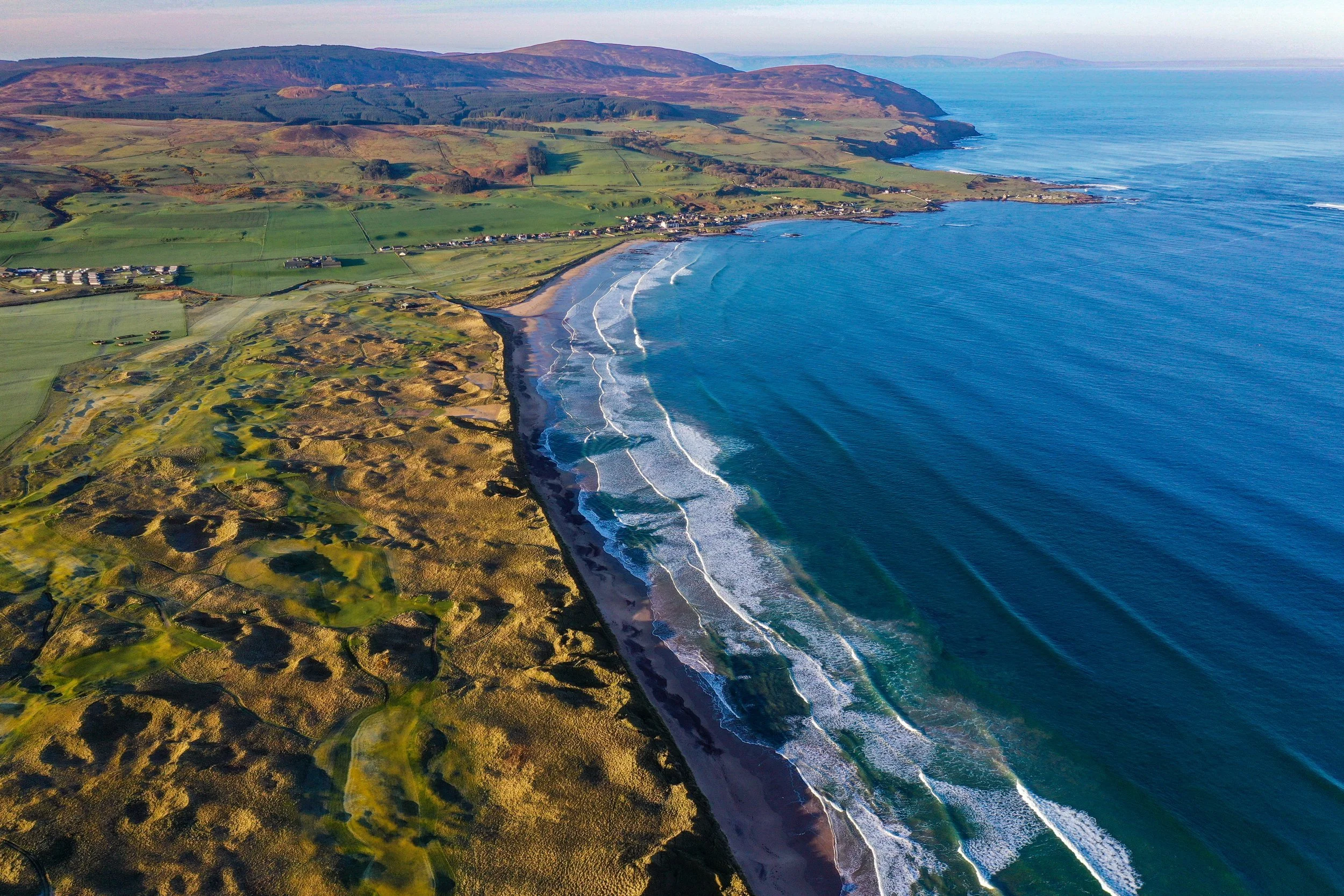
Courtesy Machrihanish Golf Club
As I write this, I've recently returned from Scotland, where we spent a week researching our Scotland's Sacred Fairways travel story through some of the country's most remarkable landscapes and communities.
I went expecting to learn more about the history of golf.
I came home thinking a lot more about the land.
What surprised me most wasn't the scenery, impressive as it is. It was watching how people interact with the land.
Over the course of the week, we encountered walkers, cyclists, joggers, golfers, dog owners, farmers, families, cattle, and sheep sharing landscapes in ways that felt quite different from what we are accustomed to in North America.
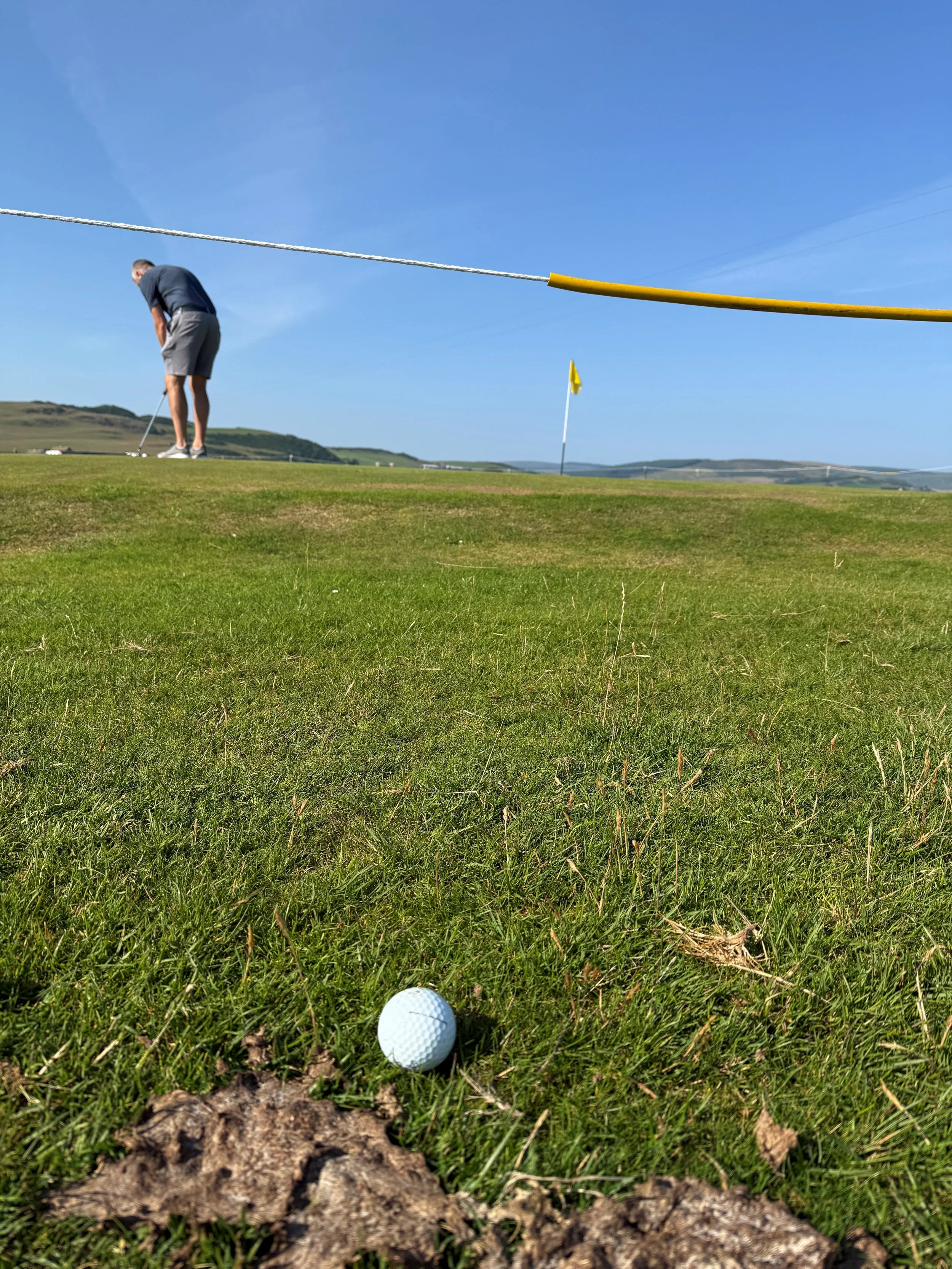
A golf ball, a cow pie, and a reminder of a shared land
A Different Idea of Access
What we were experiencing wasn't new. It reflects a much older Scottish relationship with the land.
For generations, there has been a tradition of people walking across Scotland's hills and open countryside while respecting those who live and work on the land. Often called the “right to roam,” that tradition was formally strengthened in 2003 through Scotland's Land Reform Act and the Scottish Outdoor Access Code.
The idea is surprisingly simple: enjoy the land responsibly. Respect others, care for the environment, and take responsibility for your own actions. What a concept!
We saw this at every golf course we played. Walkers, cyclists, and dog owners would cross the course, aware that golf was being played and respectful of the people around them. It didn't seem unusual or disruptive. It was simply part of how the landscape was shared.
And it wasn't only people.
At several points during our travels, sheep and cattle were grazing on or alongside the courses. I even found my golf ball sitting not far from a cow pie, a pretty good reminder that golfers weren't the only ones using these landscapes.
In many ways, that's part of the story of golf itself.
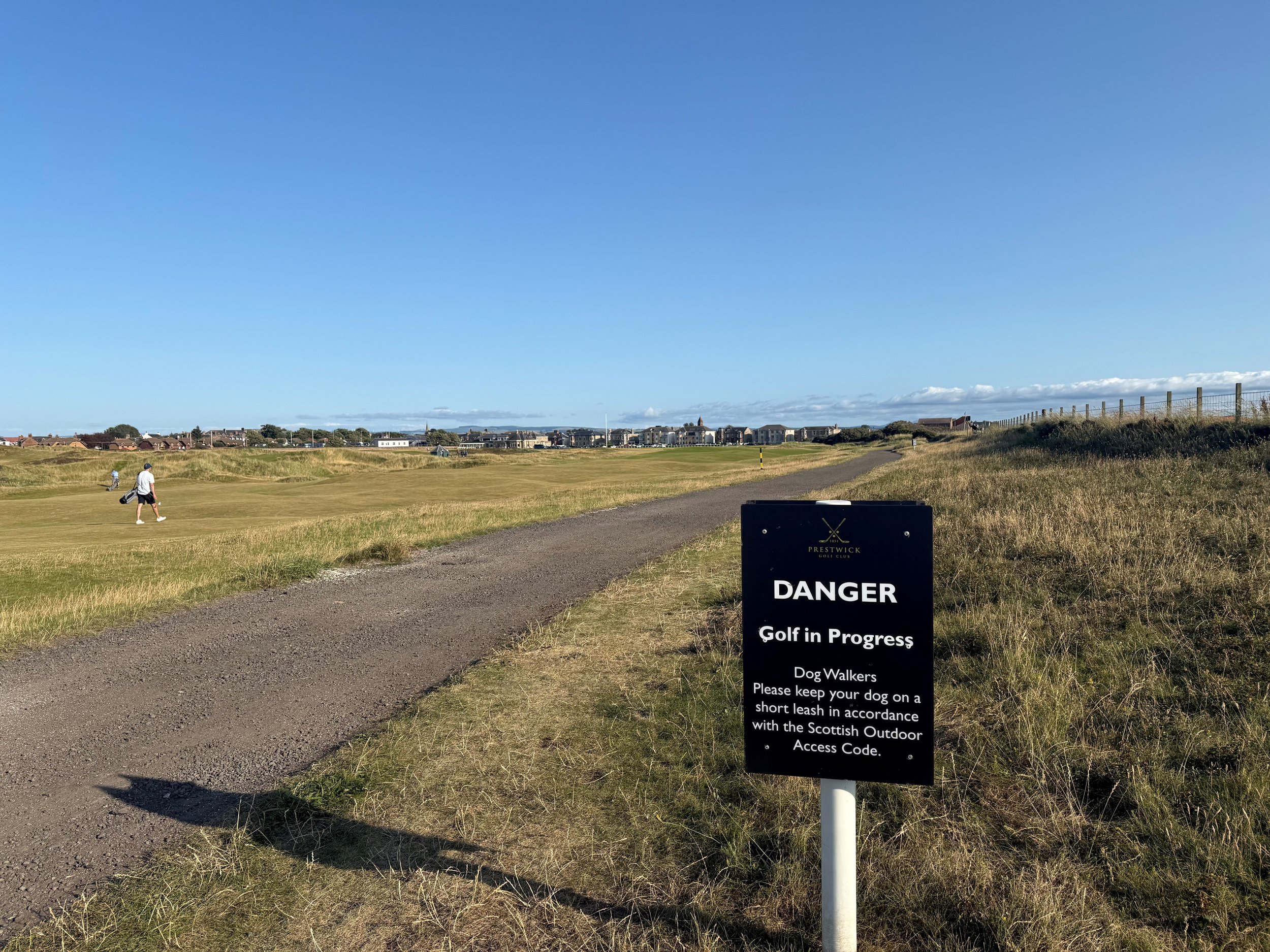
Even on the golf course, Scotland’s approach is simple: share the landscape and pay attention.
The early links weren't the carefully manicured golf courses we know today. They were working landscapes. Animals grazed, people walked across them, wind moved the sand, and golfers learned to play the natural contours they found.
A dune wasn't designed as a hazard. It was simply there.
The same was true of the hollows, firm ground, long grasses and wind. Golfers adapted the game to the landscape rather than reshaping the landscape for the game. Grazing animals even played a role by helping keep the grasses short.
Standing on these courses, that history suddenly felt much less abstract.
What initially looked informal to me was actually something much deeper: a longstanding understanding that the same landscape can be worked, walked, played on, and enjoyed by many.
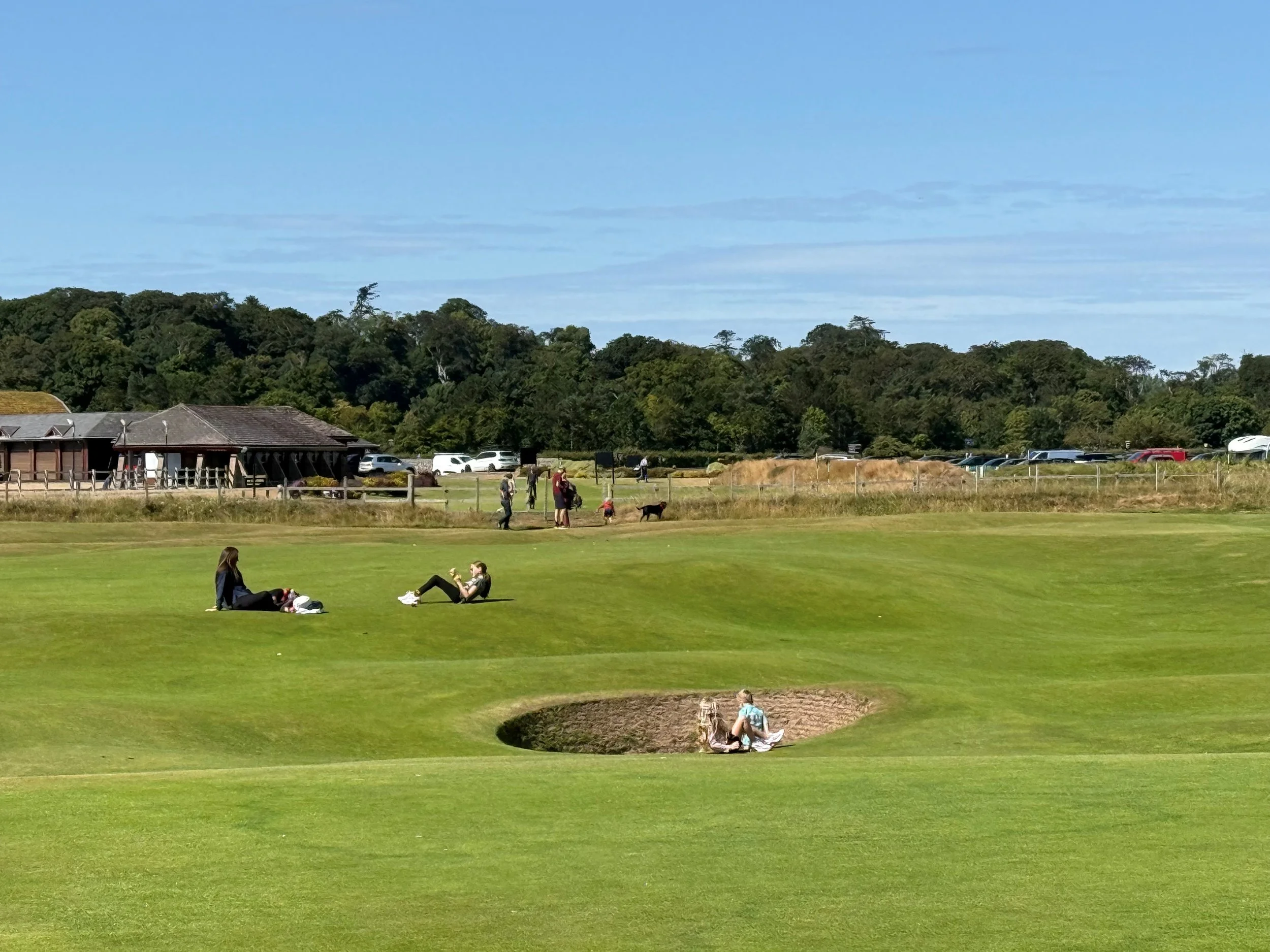
A Sunday at St. Andrews Old Course: when fairways and bunkers become places to play in a different way.
When a Golf Course Becomes a Gathering Place
Perhaps nowhere did this become clearer to me than at St Andrews.
On most Sundays, there is no golf on the Old Course. The fairways become a place for walking. Families wander across the links. Children play. Dogs accompany their owners. Visitors cross the Swilcan Bridge and walk a landscape that has helped shape the story of golf for centuries.
The contrast struck me.
One of the world's most famous sporting landscapes doesn't exist apart from the community around it. For a day, the golf course becomes something else.
Or perhaps it simply returns to being what it has always been: land shared by a community.
More Than Scenery
I have always believed that one of the gifts of travel is seeing extraordinary places.
But perhaps an even greater gift is learning to see places differently.
Every place has its own relationship with the land. There are traditions, laws, assumptions, and values that determine who uses it, how it is cared for, and what it means to the people who live there.
We often don't recognize our own assumptions until we encounter someone else's.
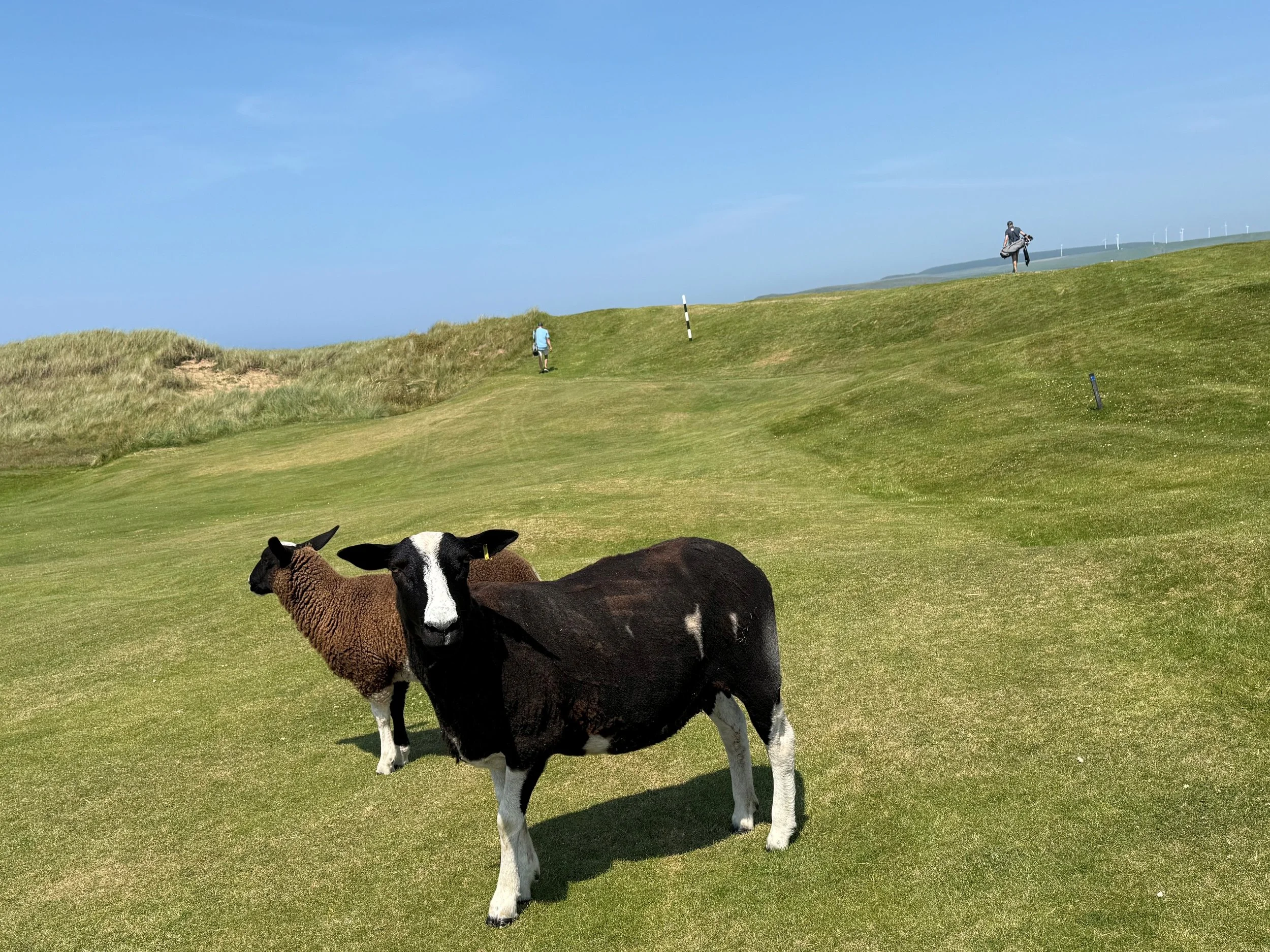
In Scotland, the landscape can be worked, walked, shared, and played on.
Scotland reminded me that a landscape isn't simply something beautiful to photograph.
It can be worked.
Walked.
Shared.
Played on.
Cared for.
And passed from one generation to another.
I went to Scotland interested in how the land shaped the game of golf.
I came home interested in the relationship between the land and the people who share it.
And perhaps that's one of the stories that will stay with me most.