
My Tokyo Neighborhood
8/20/26 · Ruth A. Kanagy“You’re deep in your own thoughts thinking of the coming day.”
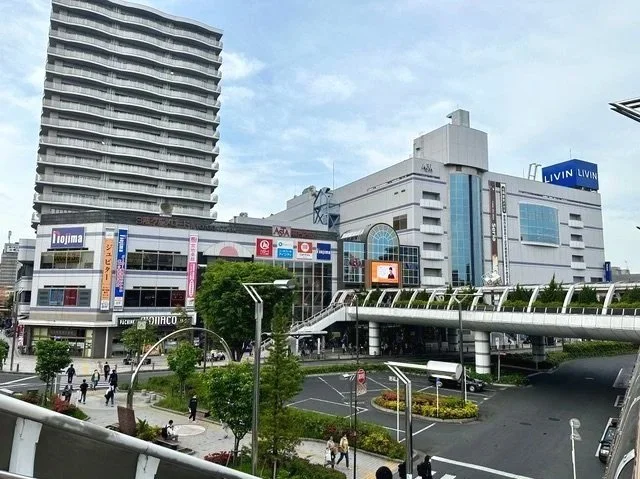
Come with me to one of Metropolitan Tokyo’s neighborhoods. I live in Tanashi town, part of Nishitokyo city (West Tokyo city), population 200,000.
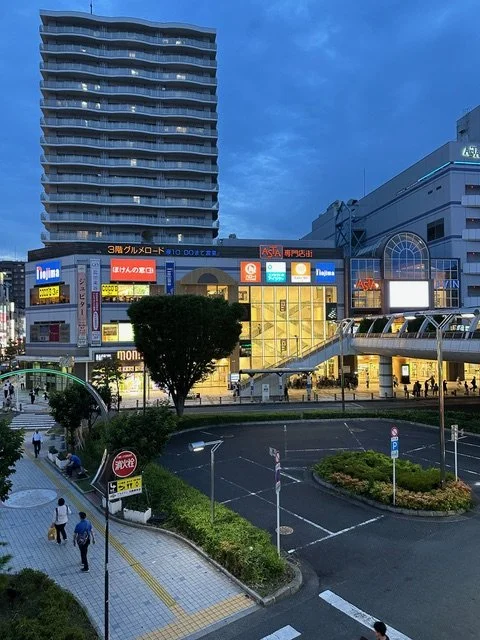
The heartbeat of Tanashi is the train station and bus hub, ringed by restaurants, department stores, and shops. There is a Denny’s, 7-Eleven, McDonalds, First Kitchen, Pete’s Coffee, as well as a drugstore, bookstore, and towering ASTA department store.
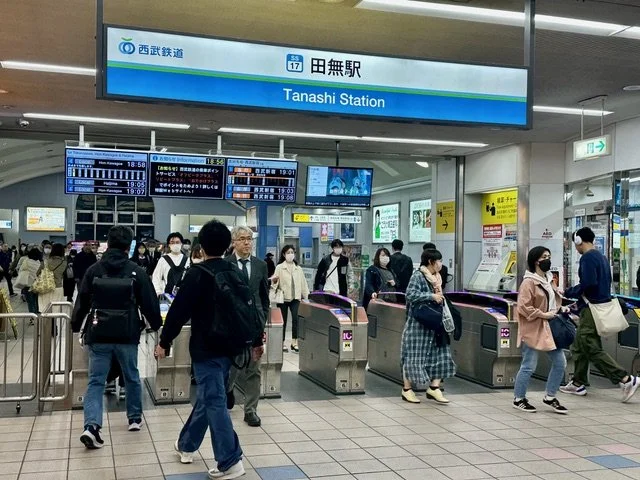
Every weekday morning, thousands of uniformed students and workers in suits stream down the sidewalks toward Tanashi station to board the Seibu Shinjuku train to school or work. Take the escalator from street level into the station. No need to pause your stride to buy a paper ticket – just tap your phone on the electronic sensor at the gate and hop the escalator down to the platform. Trains arrive every 5 to 10 minutes speeding east to Shinjuku and central Tokyo, or west to the suburbs and mountains.
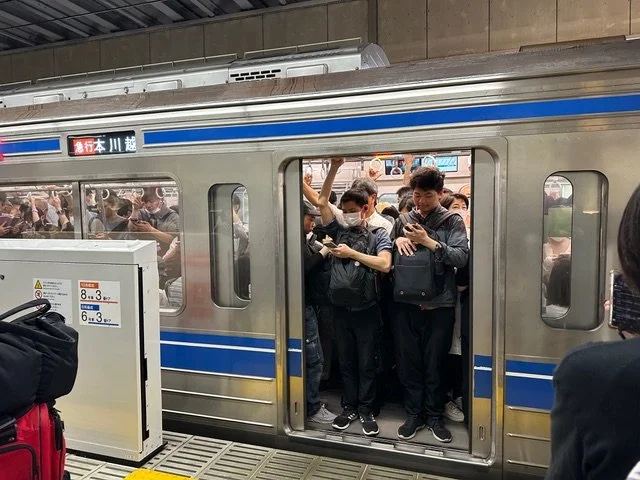
On the platform everyone stands two abreast in straight, orderly lines. No one cuts in line. White lines indicate the exact spot the train doors will open. Stand aside and let other passengers detrain, then make your way inside. During rush hour, your body will be squeezed tight on four sides. If you have a backpack, wear it in front of your body to minimize bothering others. If you have gray hair and you’re lucky, you might find one empty seat in the priority seating area.
As the train departs, you breathe a sigh of relief that you made the 7:09 a.m. If you’re standing, your body sways with other bodies as you head to your destination. All is quiet--no one talks, cell phones are muted, no loud music leaks from headphones, eyes are averted. You’re deep in your own thoughts thinking of the coming day. You hear each station stop announced by a recorded voice in Japanese and English. You glance up at the electronic sign showing the next station.
In the evening, the process is reversed as you take the train home. Arriving in Tanashi, you walk through the Peace Arch in the plaza square, cross the street and go down the stairs to the basement of ASTA department store. You pick up a red shopping basket. Vendors cry out in Japanese, “Welcome, welcome, low prices on asparagus and daikon today.” You pick up bread, asparagus, and milk, scan the items at the self-serve checkout, and head out to the street.
Hundreds of bicycles line the sidewalk, many outfitted with front and back child seats—the urban parents’ “SUV” on two wheels. On the way home you stop at Naoki’s fruit shop to pick up ripe kaki-persimmons and mikan-tangerines. At the tea shop marked by a green banner, you buy green tea and grab some yellow recycling and white garbage bags in neat rolls.
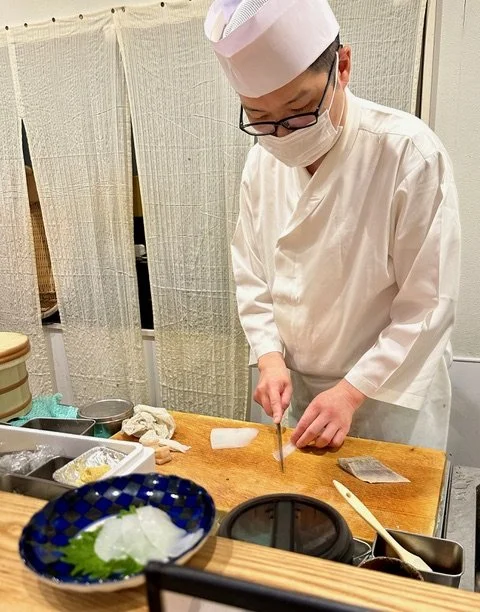
If you’re too tired to cook, you might cross the tracks to Tamahachi Sushi south of Tanashi station. Ms. Orito welcomes you with “Irasshaimase,” then, seeing your foreign face, switches to English. She spent two years studying in British Columbia. Her junior high daughter sits at the counter doing her homework. She glances up and says, “Hello” shyly in English. You order the dinner special—ten pieces of nigiri sushi. Each bite-sized sushi is perfectly formed under Chef Orito’s practiced hands. The plate comes with a side of daikon pickles, miso soup, ocha green tea, and hashi-chopsticks. Green tea is always free. Satisfied, you pay the bill—only fifteen dollars, including tax. There is no tipping in Japan, not even for taxis.
You walk the seven minutes home through a meandering pedestrian alley—former irrigation canal now covered over—and ascend the stairs to your 350 square foot, second floor “mansion,” (the Japanese term for “condo”). It was a good day.
About Ruth
Ruth A. Kanagy was born and raised in Japan as a child of Mennonite missionaries, growing up in a dairy farming community in remote eastern Hokkaido. She grew up navigating between Japanese and American cultures, customs, beliefs, food, religions, and languages, which sparked her curiosity about similarities and differences among diverse cultures and peoples. Coming to the U.S. for college, she struggled with culture shock as an invisible international student, 8,000 miles away from her family in the pre-Internet age. She wrote down those experiences in a forthcoming memoir.
Continue the Journey
If Ruth’s story has inspired you, discover The Sea & Spirit of Japan and experience the people, landscapes, and meaningful encounters that continue to draw her back.