
Why St. Paul & St. John Have Wisdom for Navigating Cultural Tension Today
9/3/26 · Nelson KraybillOriginally published in 2025
“Being in the lands where events took place helps me see the Bible as three-dimensional, instead of as a flat book with no historical context.”
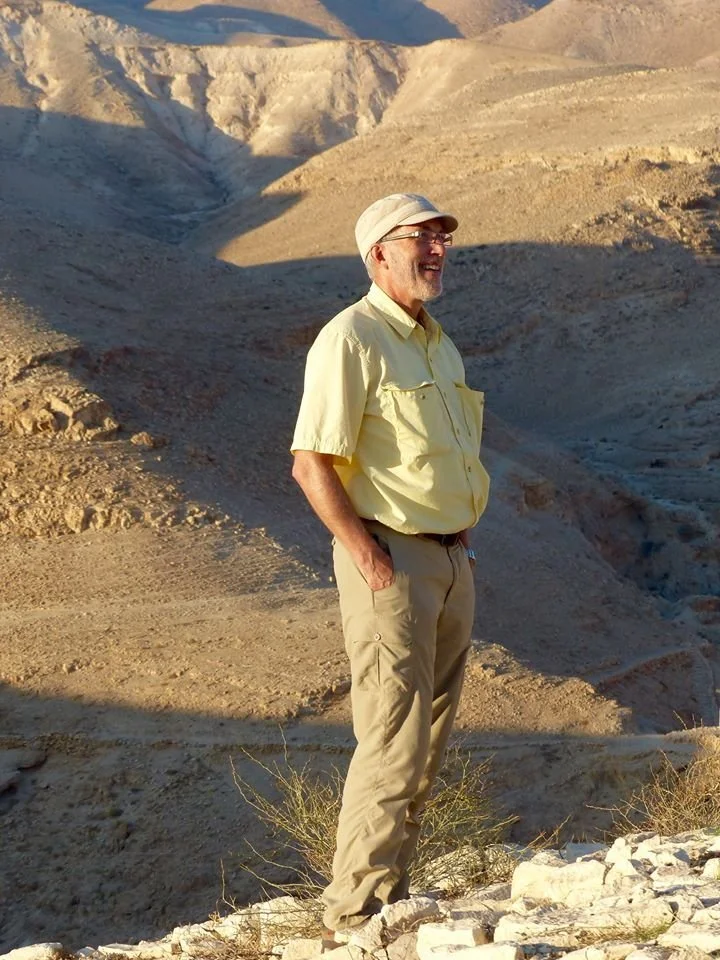
Nelson Kraybill
The United States feels more polarized today than I’ve experienced at any time in my life, and Canada has its own stresses. It’s easy to get tangled in the divisions of church and society. Sometimes I get discouraged and even angry. But as a student of history, I know that such tension is not unique to the twenty-first century.
That prompted me to find help and hope in the Bible, in ancient Judaism, in Jesus, and in the early church. I wrote a book called Stuck Together - The Hope of Christian Witness in a Polarized World. After the book was released in 2023, I wondered if it might make an engaging focus for a tour.
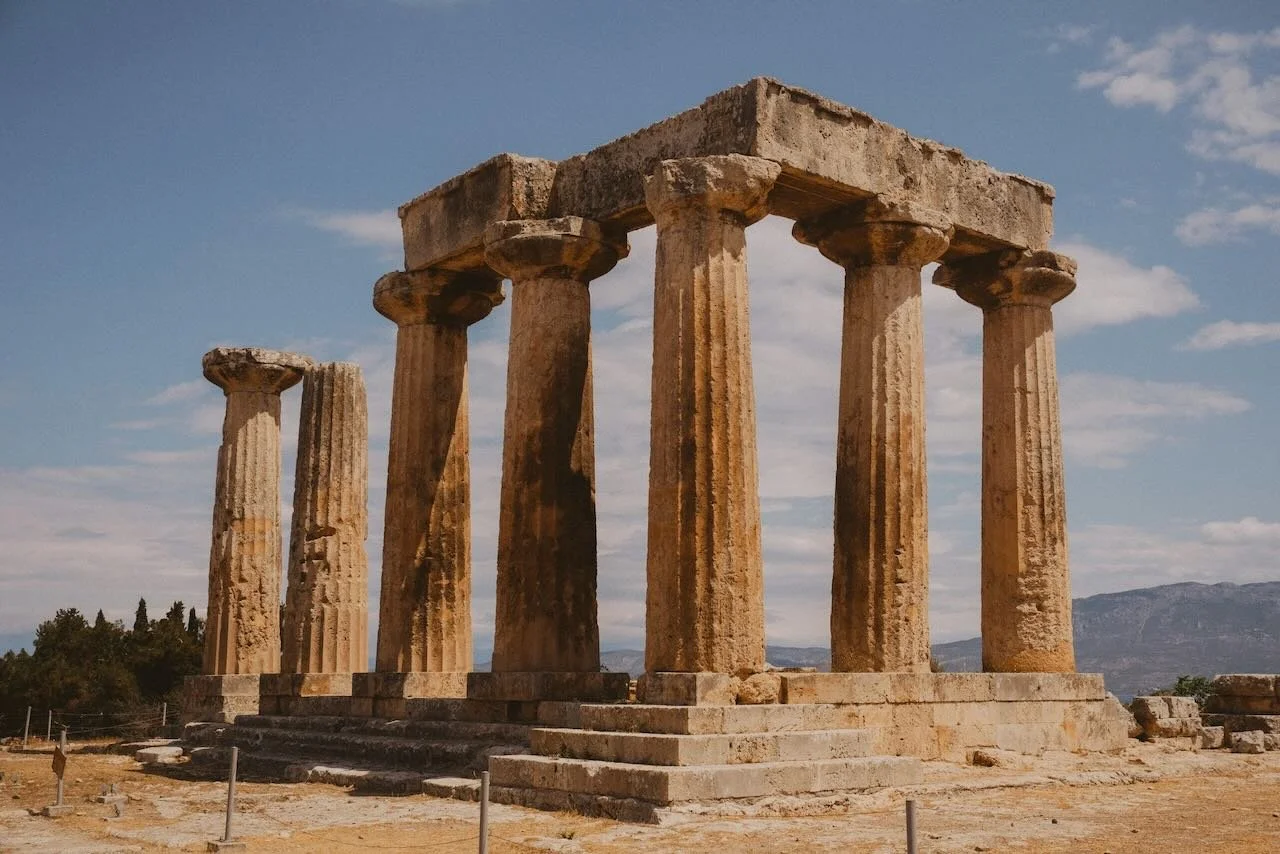
Temple of Apollo in Ancient Corinth, Greece
My wife Ellen and I visited Greece about 10 years ago. As we walked through streets with remnants of ancient Corinth, I noticed how close the Temple of Apollo was to the historic marketplace. The proximity of temple to marketplace helped me visualize a hot issue that early Christians fought over: whether they should eat meat sacrificed to idols in such temples. That’s an example of why I love leading biblical tours. Being in the lands where events took place helps me see the Bible as three-dimensional, instead of as a flat book with no historical context.
When our tour group visits Ephesus we will see ruins of a temple to the Roman emperor as a god. People of Ephesus built this temple in about AD 90, just before when I date the writing of the book of Revelation. I believe John was a local Christian prophet, probably based in Ephesus, who resisted that temple, protested the idolatry of worshiping any ruler as divine, and was sent off to Patmos in exile. I wrote about how emperor worship infiltrated the Roman empire in my book, Apocalypse and Allegiance: Worship, Politics, and Devotion in the Book of Revelation.
Why are the lives of Paul and John relevant to an exploration of polarization today? First, both are important biblical writers. The Apostle Paul wrote thirteen books of the Bible and John of Patmos (not the beloved disciple) wrote the book of Revelation. Both lived in the first century, when there was tension between people who wanted to align with the Roman empire and those who did not.
Paul and John lived in very different political and church circumstances and took different approaches to their polarized worlds. John, a prophet in what is modern-day western Türkiye, wrote after Rome destroyed Jerusalem in AD 70 and the Roman persecution of Christians intensified. Paul wrote his letters before the fall of Jerusalem and before the Roman Empire geared up any serious persecution against Christians.
The local church was a mess when Paul wrote his letters to the Corinthians. Nevertheless, Paul saw redemption happening through the Christian community. And throughout Paul’s letters, there’s magnificent hope in the kingdom of God. Paul is not against the kingdoms of this world, in the sense that he hates them. But he wants fellow believers to place their loyalty in the reign of God, and to live the way of Jesus. With the resurrection of Jesus as a kind of down payment, Paul eagerly anticipates the restoration of all creation to reflect the glory of God. He wants to enlist people of all cultures into this transforming hope.
Paul is passionate about carrying the gospel to the heart of the empire in Rome so he can share the message of God’s love in Jesus Christ where it can have maximum impact. Paul makes it to Rome, but as a prisoner. Thankfully, he continued to write letters to the churches from prison.
In contrast, John gave up on Rome—at least in its current form. He calls Rome “Babylon,” a whore and a beast. Yet in the end, John’s vision turns to a healing of nations and a new heaven, a new earth—or a renewed heaven and earth. Creation restored is not some fantasy for the future, but an emerging reality. John sees the new Jerusalem—with the Lamb of God at the centre—already starting to come down from heaven. With this metaphoric image of the church, John calls readers to place their hope in Jesus rather than in emperor or empire.
Paul wrote to Corinthian churches in conflict, “If I speak with the tongues of mortals and of angels, but don’t have love, I’m a sounding gong and a noisy cymbal.” The lives and writings of both Paul and John have insights for us today as we embody the reconciling love of Jesus in a fractured world.
About Nelson
Nelson Kraybill thrives on connecting ancient sites and texts with scripture and early church narratives, always with a view to how the witness of previous generations is relevant for Christian life today. Over a period of four decades he has variously served as a pastor, cross-cultural missioner, college instructor, seminary administrator, and Mennonite World Conference president.