
When Traditions Travel
9/24/26 · Mary Lou Bonham“Yerba Mate is always a stubborn refusal to hurry.”
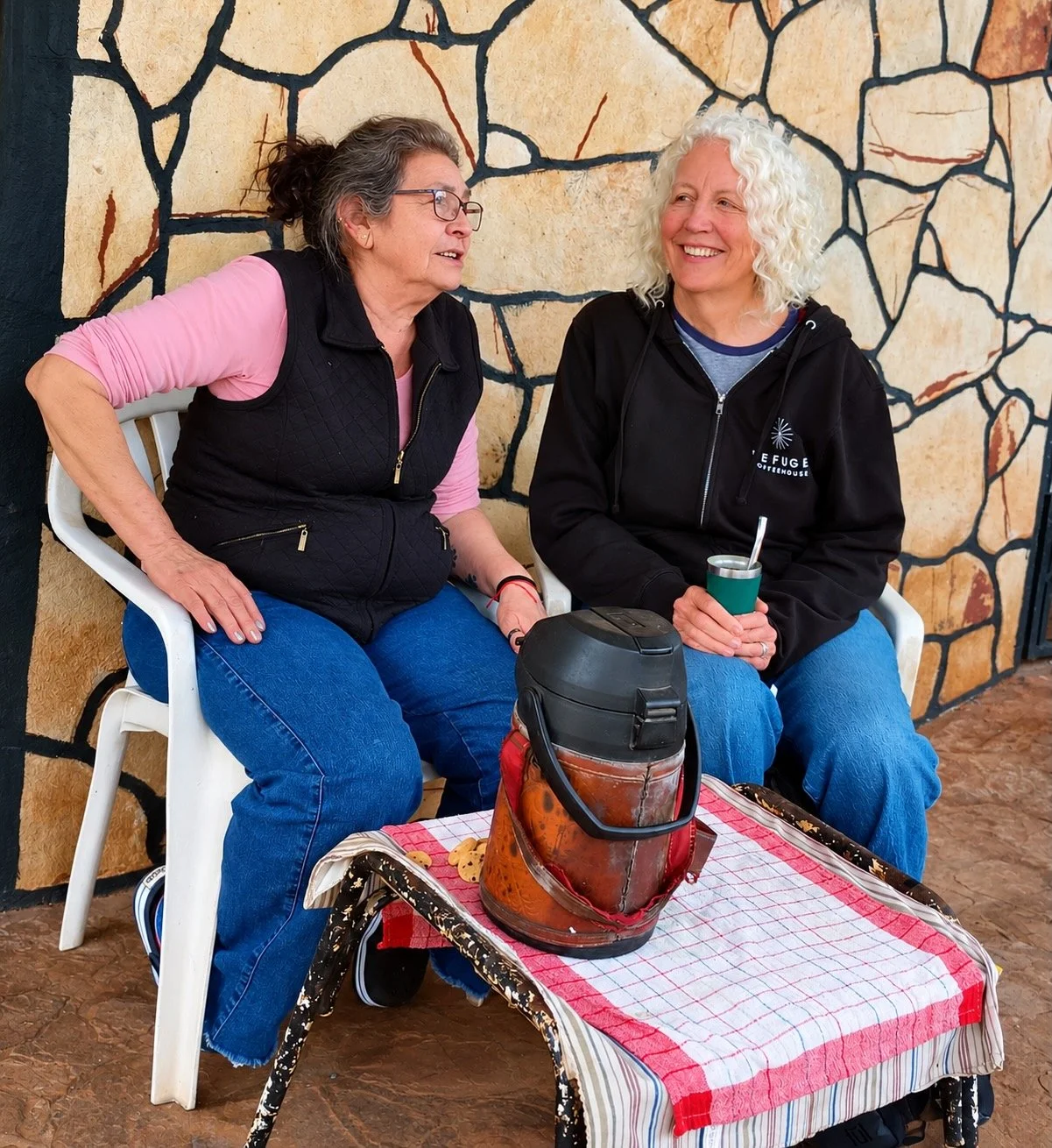
Mary Lou Bonham, pictured right
My worlds suddenly collided on a sidewalk in downtown Portland.
I was walking past a fru-fru coffee shop when my eye caught a tasteful little display in the window: a guampa, a bombilla, and a small bag of Yerba Mate (pronounced YAIR-bah MAH-tay) .
I stopped. Shocked. For one thing, there was the sticker price. And come on! Here!? This collection belongs squarely in Paraguay, most traditionally in the hands of a semi-toothless man with a thermos tucked under his arm, heading for some shade and raising the guampa as an invitation to his neighbors.
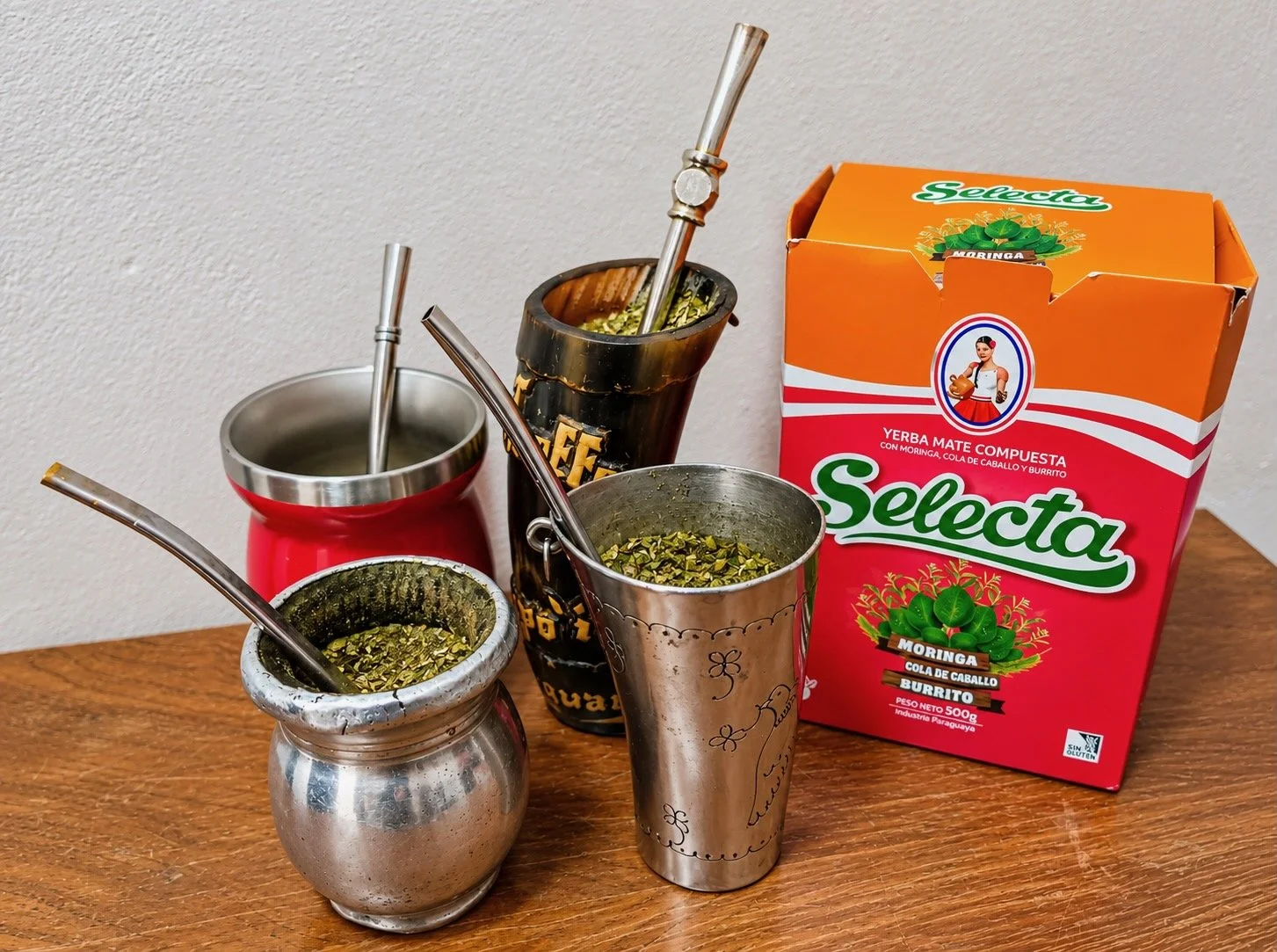
Yerba Mate, Guampa, Bombilla
The next thing I felt was offended. What right did this world have to hijack this tradition from my other world? And how could Portland possibly do justice to something that belonged, in my mind, under a mango tree in Paraguay?
I looked more closely. There was a pamphlet. It explained that mate was a “friendship ritual.”
Well, isn’t that interesting.
Then it went on to explain its antioxidant properties and other health benefits.
Well, isn’t that nice.
There is nothing more Paraguayan than a guampa, bombilla, and Yerba Mate. It is consumed hot ("mahte") in the early morning and, if you can afford it, ice cold (“tereré”) during the day by co-workers, friends, family, and even strangers.
Yerba Mate is always shared; always offered to whoever happens to be around. It provides hydration after a long night without fluids or a hot day of work. It gives you a way to wake up slowly and mindfully. Or a reason to stop working, rest, and recharge with others.
Most importantly, Yerba Mate is always a stubborn refusal to hurry.
The guampa goes around the circle. You drink your turn, hand it back to the server, and the server refills it and passes it to the next person. Then you wait. And talk. Tease. Tell stories. Laugh.
Eventually, the entire group has been settled by both the properties of the herb—in its soothing hot or refreshing cold form—and by something less tangible: the quiet mutuality and trust involved in sharing the same bombilla.
Everyone drinks from the same straw.
That’s just how it’s done.
This practice both reflects and supports being “tranquilo,” which is quintessentially Paraguayan. The word is related to the English “tranquil,” but carries a fuller meaning that is difficult to translate.
An example that comes to mind is an early memory of riding in an old “bumble bus” that broke down in the middle of nowhere along the Trans-Chaco on a hot summer day.
Everyone found their way to the nearest spot of shade. Several people offered their cold water, someone else pulled out the Yerba Mate and guampa, and soon we were sitting or squatting in a circle, drinking and waiting for the situation to resolve itself.
“Tranquilo, che-ra-á!” was the tone.
I do not remember a single complaint or raised voice.
This practice is profoundly inclusive, anti-capitalist, anti-individualist, and anti-germophobic. My ethnically German Mennonite father, schooled in the discipline of heavy work on a Kansas farm, found all of this hard to take when he began directing the medical work at the leprosy station in Paraguay. He probably objected to all of the “anti’s,” but most stridently declared the drink to be a colossal waste of time.
He, of all people, with his stomach ulcers and migraine headaches, could have used a good dose of tranquilo. But this was one battle even his stubborn will could not change. Mate / tereré was adopted by immigrant communities from many of the people groups in Paraguay and then carried with them to their native countries.
In the Steinbach grocery store in Manitoba, we could buy Yerba Mate right off the shelves because of Mennonites traveling back and forth. We would stock up when we visited or haul it back in ten-kilo bags from Paraguay to Kansas or Portland, hoping we wouldn’t be questioned about it at the border.
The truth is, I never thought of mate and tereré as anything special or unusual growing up. It would never have occurred to me to call it a “friendship ritual.” It was just life. It was what people did. Yerba Mate was as ordinary as putting on your shoes or sitting down for a meal. And maybe that is why I never noticed how much was carried in that little horn-shaped cup.
Living without it—and seeing it taken out of its context and labeled a “friendship ritual”—that made me start thinking about its meaning and its power.
Yes, it is a friendship ritual.
But it is also a rest ritual.
A hydration ritual.
A hospitality ritual.
A “you are here, so of course you get some” ritual.
A “we have a problem, but there is no point getting worked up about it” ritual.
A “sit down, che-ra-á, my friend” ritual.
And perhaps most of all, it is a reminder that life is meant to be savored and shared.
I am grateful that my husband and children now enjoy this ritual with me in the rhythm of our lives. We get to slow down and borrow some peaceful refreshment from another world. Even sometimes virtually, each with our own guampa, but somehow still feel the connection.
A bit of advice, should you find yourself in Paraguay and someone offers you the guampa—which they will if you hang out with locals:
Don’t worry about germs. We drank with everyone and anyone during our years in Paraguay, and we were healthier than ever.
Don’t stir the bombilla. That’s the server’s job, and they know what they are doing.
Don’t talk when it’s your turn to drink. Someone will inevitably say, “It’s not a microphone!” and then everyone will laugh.
Drink all of what’s in the guampa before handing it back. If you leave some—well, that’s just confusing.
And if you do like it and want more, do not say “thank you” when you hand it back. They’ll respectfully skip you from then on.
You’re welcome.
About Mary Lou
Mary Lou Bonham grew up in Paraguay immersed in American, German Mennonite, and Latino Paraguayan cultures. A nurse, mental health therapist, and community builder, she is fascinated by what shapes people and communities and seeks to nurture connection, healing, and shalom. Now based in Portland, Oregon, she remains closely connected to family and friends in Paraguay.