
St. Cuthbert’s Way: A Celtic Journey Through Thin Places
7/23/26 · Scott Jeffries“You are suddenly reminded that in our overquantified and scheduled world you are still at the mercy of nature and there is nothing that can be done about it.”
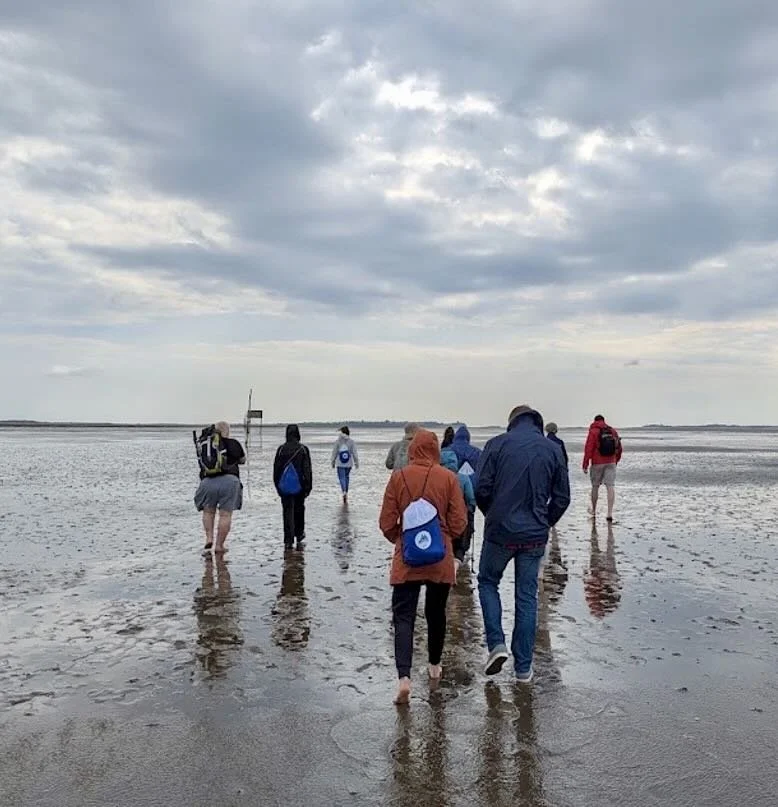
Pilgrims cross the tidal sands in the last leg of St. Cuthbert’s Way
There is a wildness to the final two miles of St. Cuthbert’s Way. You are suddenly reminded that in our overquantified and scheduled world you are still at the mercy of nature and there is nothing that can be done about it.
Access to Lindisfarne, known as Holy Island, is dictated by the tide; twice a day pilgrims can venture across the causeway but only during those times. Not even cars have access to the island during high tide.
Pilgrims remove their shoes and walk those final two miles on the tidal floor, with the cold and damp evidence of the North Sea grounding them to a footpath that will be washed away in a few hours. This part is known as the Pilgrim’s Way, and it is most likely the same path that Celtic priests St. Cuthbert, and St. Aidan before him, took to finally reach the island from spots from Scotland.
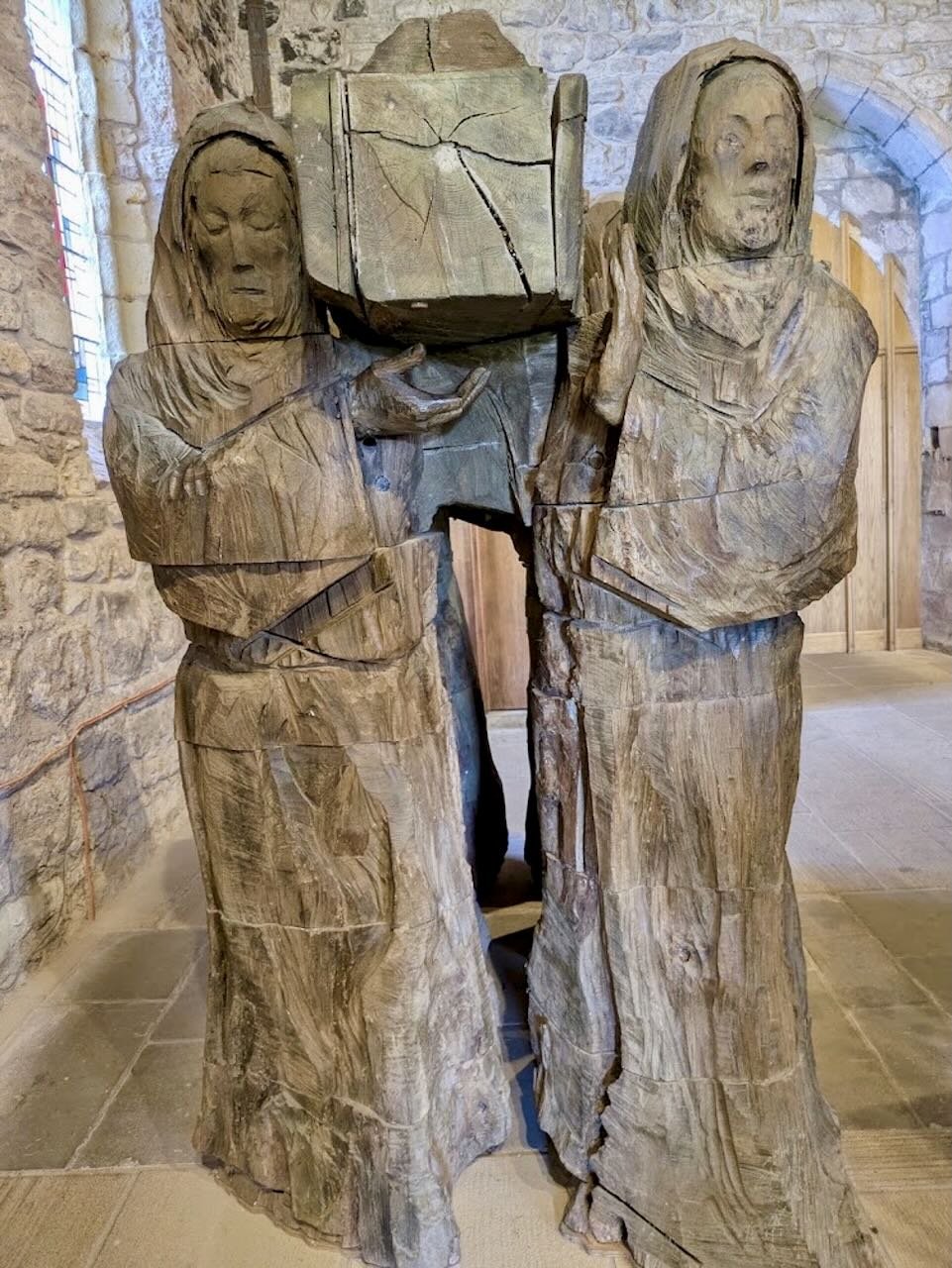
Statue of monks carrying the coffin of St. Cuthbert.
A Dynamic Legacy of a Saint
A few miles before this walk across the tidal causeway is Cuthbert’s Cave, a memorable spot along St. Cuthbert’s Way. Cuthbert, a beloved Abbot of Lindisfarne, died in 687 but when Vikings began raiding Lindisfarne in the 800s, the monks of Holy Island wanted to protect the remains of Cuthbert and they took his coffin off the island and hid in the cave that would later bear Cuthbert’s name. Cuthbert’s coffin would have a long and arduous journey before it finally arrived in Durham and became the site of the modern Durham Cathedral. Cuthbert, nicknamed “The Fire of the North”, was famous in death as many kings and leaders visited his tomb in Durham and received blessings and strength for battle. Not to be forgotten, Cuthbert’s life was the epitome of devotion, service, healing, and mission.
As a teenager around Melrose, in what is now Scotland, Cuthbert was keeping sheep when he had a vision of angels guiding an inflamed soul to heaven. This was the exact moment St. Aidan, Bishop of Lindisfarne and hero of Celtic Christianity, died. Cuthbert took this as a sign from God and joined the monastery at Melrose Abbey.
A Modern Pilgrimage Tied To An Ancient Story
Today, Melrose Abbey is where St. Cuthbert’s Way begins. Following a path of 62 miles, St. Cuthbert’s Way traces the route through the Scottish/English border region that would have included the areas where Cuthbert preached and performed miraculous healings. St. Cuthbert’s Way as a modern pilgrimage began in 1996 as Scottish and English governments collaborated to create the pilgrimage path and honor the legacy of Cuthbert who had become a symbol of Christian devotion, adventure, integrity, and saintliness. The path is known for its rolling hills, quaint countryside, and borderland history.
The Celtic Christians were a sending people who practiced pilgrimage as a sign of devotion to God. These Celtic monks and their followers would set out with only the Holy Spirit as their guide. Appropriately, remembering St. Cuthbert through pilgrimage is a powerful way of connecting to this traveling heritage while illustrating that Christianity in the British Isles was made possible on the backs of people like St. Aidan and St. Cuthbert, who made good on their promise to honor God and reach others with the Gospel of Jesus.
Something Wild Awaits
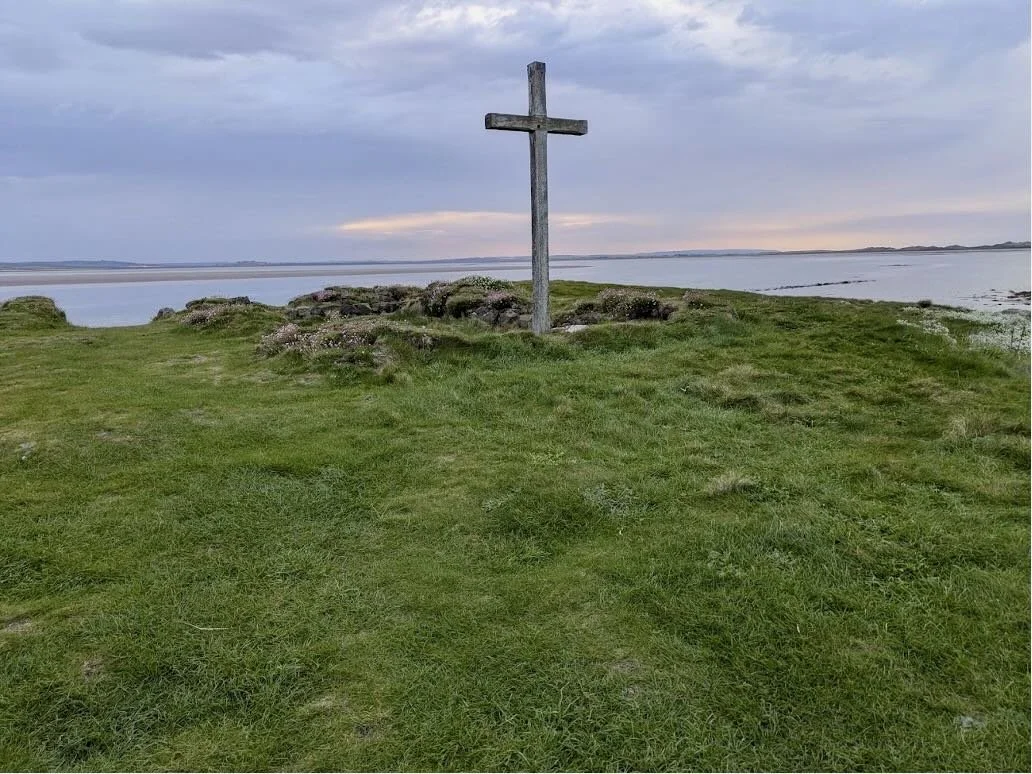
St. Cuthbert’s Island off the shore of Lindisfarne
Once on Lindisfarne and looking to the southwest there is one obvious island with a cross planted on it. This is St. Cuthbert’s Island, a place where the saint would retire to for solitude and quiet. At low tide, one can visit the island from Lindisfarne. Most likely, you will notice eider ducks with their white backs and black sides. These are known as St. Cuthbert’s Ducks or Cuddy Ducks, named because St. Cuthbert was known to attract them while on the island. These ducks serve as a reminder that all along this pilgrimage there is a wild nature to the land and the Celtic Christians that transformed this region from pagan to Christian 1,400 years ago.
If walking St. Cuthbert's Way is a journey that speaks to you, we'd love to hear from you. We're exploring the possibility of offering this experience with TourMagination in the future. Please take a moment to complete this short survey and let us know of your interest.
About Scott Jeffries
Scott Jeffries is a Christian writer, professor, founder of Impossibly Good Ministries, and doctoral researcher whose work focuses on Christian pilgrimage, spiritual formation, and Celtic Christian traditions.