
From Revolution to Reflection: Stories We Are Still Learning to Tell
1/22/26 · Richard Bergmann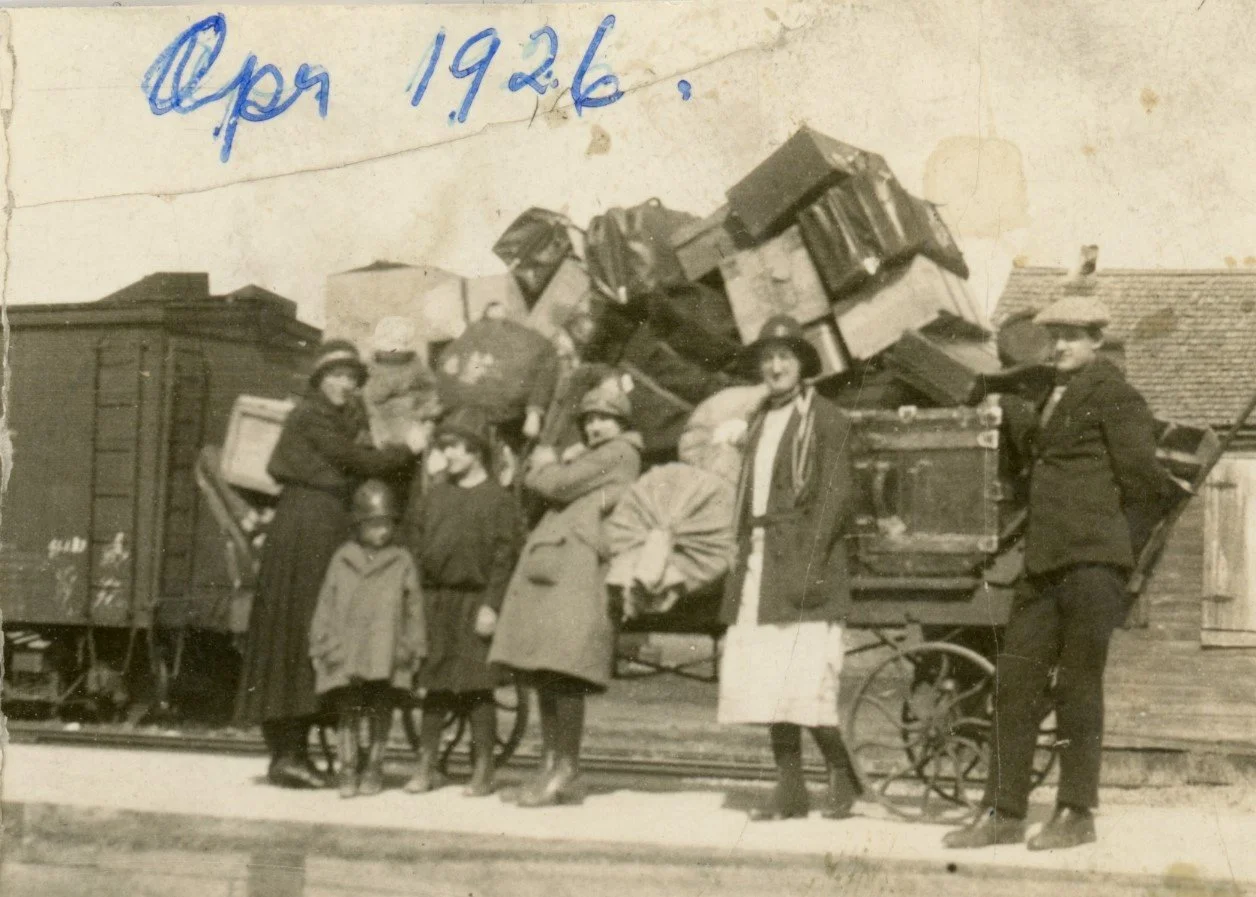
Captured in 1926, this photograph shows the Voth and Klassen families traveling by train through Manitoba as part of a larger Mennonite migration. Between 1923 and 1930, about 21,000 Mennonites—known as the Russlaender—left the Soviet Union to build new lives in Canada. (Mennonite Archival Information Database)
Last week, Diane and I had the privilege of attending the premiere screening of The Russlaender Migration: From Revolution to Reflection. Produced by Refuge31 Films, the documentary recounts the 1920s migration of Russian Mennonites to Canada and the 100-year commemoration journey that took place in 2023, a cross-Canada train journey from Québec City to Vancouver with events and gatherings along the way. TourMagination was honoured to support this historic initiative by providing tour logistics for the journey.
The film stirred deep memories of our grandparents and the stories they shared about settling on the Canadian prairies, stories of resilience, faith, hardship, and hope. At the same time, the documentary brought forward perspectives that many of us did not grow up hearing. In particular, it explored the impact of Mennonite settlement on Indigenous peoples, including displacement and forced relocation to reserves. For centuries, Mennonites migrated to lands made available for agrarian life, often unaware, or unable to see, the cost borne by those who had long stewarded the land before them.
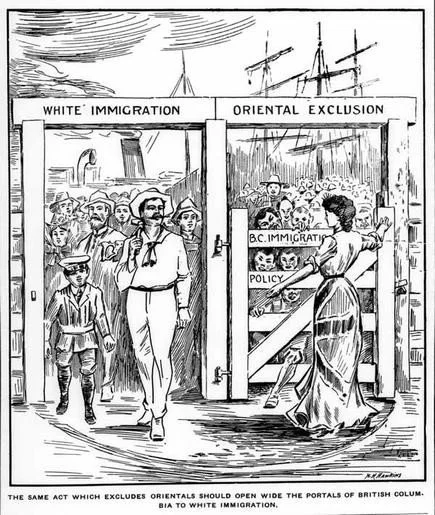
Political Cartoon from the Saturday Sunset, 1907 captioned, “The same act which excludes orientals should open the portals of British Columbia to white immigration.” (The Gatekeepers, circa 1907. Saturday Sunset (Vancouver), 24 August 1907.)
Anti-Chinese sentiment in British Columbia grew as Chinese workers arrived for the gold rush (1858) and later built the Canadian Pacific Railway (1881-85)—labour deemed necessary but excluded from visions of a “White Canada.” This cartoon reflects racialized immigration policies that culminated in the 1923 Chinese Immigration Act, passed on Dominion Day (Canada Day), a date remembered by Chinese Canadians as “Humiliation Day.”
Source: (Chan, A. (2023). Chinese Immigration Act. In The Canadian Encyclopedia. Retrieved from https://thecanadianencyclopedia.ca/en/article/chinese-immigration-act)
Another lesser-known story highlighted in the film was how the opportunity for Russian Mennonites to immigrate to Canada in the 1920s coincided with the closing of Canada’s doors to Chinese immigrants due to racial exclusion policies.
These themes of migration, gratitude, loss, and injustice are deeply woven into the histories of both Canada and the United States. While we remain profoundly thankful that our ancestors were welcomed and allowed to settle, the documentary invites us to reflect honestly on the broader human impact of those policies and decisions.
The Russlaender Migration documentary, sponsored by the Centre for Transnational Mennonite Studies and the Mennonite Historical Society of Canada, will be made more widely available with additional screenings in the near future.