
Building Community in a Context of Displacement
6/10/26 · Robert Jack Suderman“Learning becomes solidarity, and solidarity is learning.”
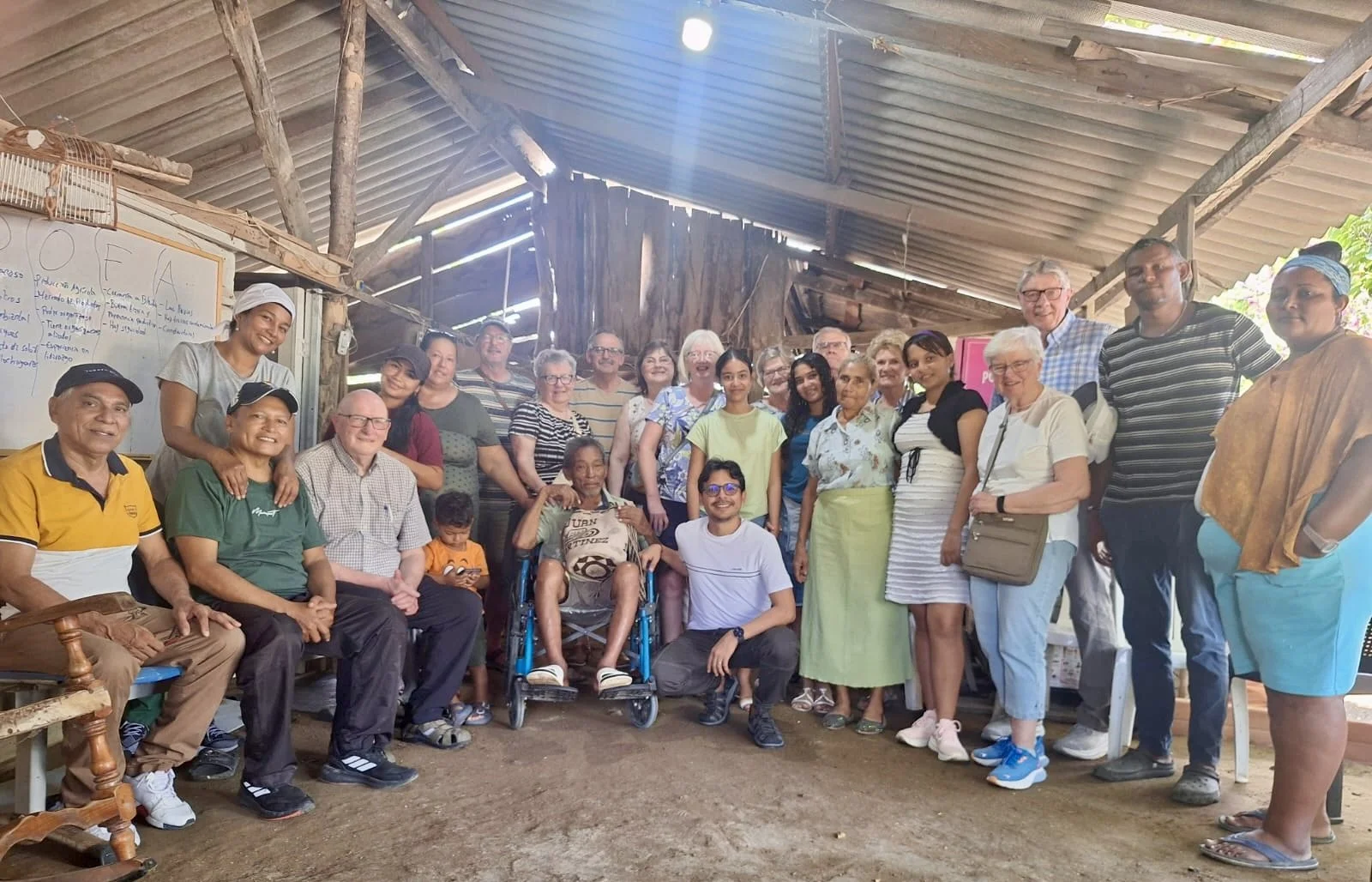
Magdalena River Cruise: Faith & Culture in Colombia tour group led by Jack & Irene Suderman with the Las Nubes community
Las Nubes (The Clouds) is a community of persons who have been forcibly displaced from other regions they still call “home.” Las Nubes is situated on the outer edges of the city of Barranquilla, Colombia, right on the Caribbean Coast.
None of the 130 inhabitants of Las Nubes comes from Barranquilla. They all “come from away,” (as Newfoundlanders would put it). In a recent visit, they listed for us their provinces of origin. They come from all over Colombia. They are aliens in their own community.
They are a tiny segment of more than 5,000,000 Colombians who have been internally displaced from their homes to find refuge elsewhere. It is a long and difficult story, too long to tell here. The chronic struggles for land, equality, justice, and livelihood have gone on for 80 years. Las Nubes is a snapshot of these bigger issues.
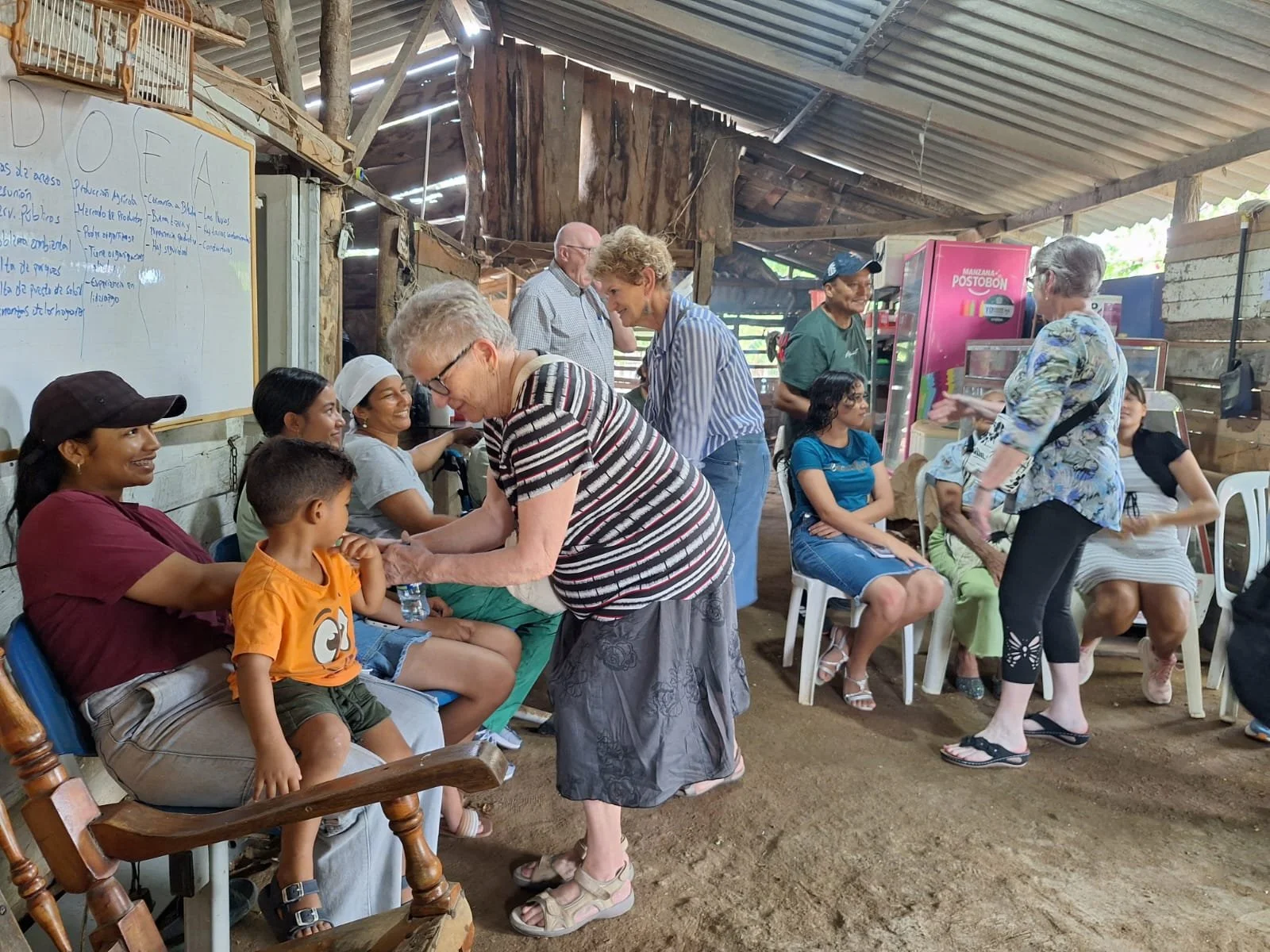
Our small tour group was warmly received by Juan Martinez Jr., the community leader, and many other community members. They were glad we had come, and they were eager to share their life and experiences with us. Juan Martinez Sr., the father of the current leader, was also there - elderly, sitting quietly in his wheelchair, unable to say much due to a medical condition. But his smile and his handshake were warm and welcoming.
Juan Jr. provided a glimpse of their community: 130 people: all from “away.” Some were originals from 40 years ago when a group accompanied Juan Sr. to this place in search of refuge. Most, however, were young, eager for life, pushing for change. Several young high school and university students were with us as well. They told of their struggle to be admitted to local schools, because of their “away” status. They told us how they, together with Juan Jr. and other leaders, have established their own school. Their curriculum includes not only the regular things like mathematics, science, social studies, and such but also includes lobbying (incidencia) techniques and skills—a vital need for survival in their context.
Juan Jr. mentioned that after 40 years in this location, the community was still not receiving electrical services or water from the municipality. Persistent effort is needed for even the smallest advancement. Recently, for example, they had finally received permission to open a small bakery (panadería) in order to provide bread for the community. Unfortunately, weeks after opening the bakery, an extortionist gang targeted them and threatened them with death. They needed to close the panadería.
They told us about the difficulty in lobbying for school bus pick-up for the community. The children had to walk about 3 km to reach the closest bus. I was reminded of the voice of a 1960s civil rights leader in the USA: “How can we lift ourselves up by the bootstraps, if someone keeps cutting the straps?” How true.
They also showed us the vibrant pig-growing project that had been made possible—first of all, by lobbying for permission, and then by raising the funds to get started. They were rightfully proud of this major accomplishment.
Through the school curriculum, several young girls told us their experience of visiting senators and embassies in Bogotá. We tried to imagine these young teenagers, flying to the big capital city, and engaging such high-level functionaries. They came home with some successes. Switzerland had agreed to fund a major project to deal with environmental contamination of drinking water and soil in the community. Their successes made them proud. “We have to learn to be leaders,” they said. “Juan Sr. can no longer do it for us.”
The small Mennonite congregation in Barranquilla has walked with this community for 12 years. Pastor Blas was clearly admired and appreciated by the community members. Pastor Blas told us how important this connection was for their congregation. “They are a constant source of encouragement, hope, and support for us,” he said.
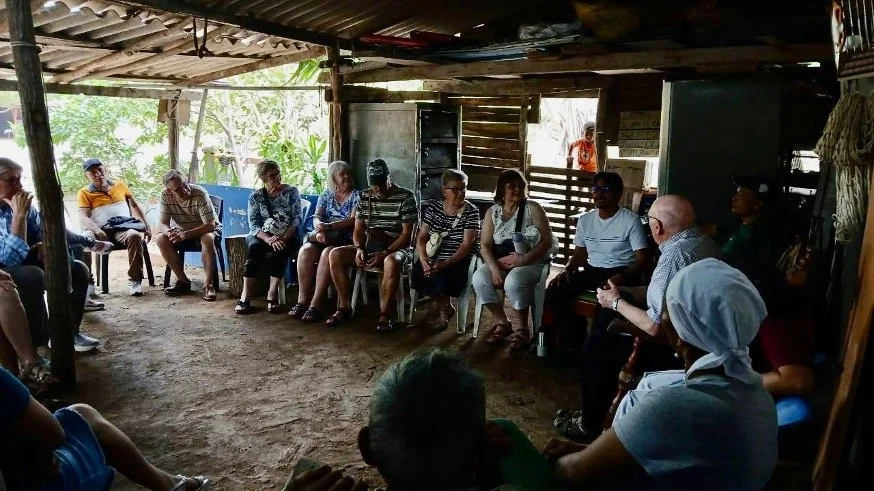
It was clear that our small group was deeply moved by this encounter. It’s an experience that lingers. Juan Jr. and Pastor Blas have been in touch with me several times after the visit to thank us for coming. Expressions of solidarity are a lifeline for communities such as Las Nubes. Given their success in meeting with ambassadors, we encouraged them to visit the Canadian embassy as well.
We left the community wanting more. We knew we had been richly blessed by their generous sharing —yes, they did also offer us a cup of coffee and a piece of bread. Juan Jr. and Pastor Blas told us that they too felt blessed by our interest, our visit, and most of all by our presence. Learning becomes solidarity, and solidarity is learning. We hope to go back next year.